Lightsaber combat didn't appear overnight as a collection of seven perfectly defined fighting styles. It evolved over thousands of years as the Jedi learned more about their weapon, faced new enemies, and discovered better ways to use the Force in battle.
The earliest Jedi did not have the lightsabers we recognize today. Their weapons, and the techniques used with them, changed considerably as lightsaber technology developed. As the weapon became more reliable and more common, so did the need for combat techniques specifically designed around its unique properties.
Unlike a traditional sword, a lightsaber has no conventional blade, cutting edge, or weight distributed along the length of the weapon. A Jedi could strike, parry, and redirect attacks in ways that simply weren't possible with a metal sword. As lightsaber-wielding opponents became more common, those differences became even more important.
Over time, Jedi developed increasingly specialized approaches to combat. Some focused on defense and endurance, while others emphasized precision, speed, power, or aggressive attacks. These approaches eventually became the seven traditional forms of lightsaber combat: Shii-Cho, Makashi, Soresu, Ataru, Shien/Djem So, Niman, and Juyo/Vaapad.
But the seven forms are only part of the story.
To understand why they developed, it helps to look much further back, to the weapons used before the modern lightsaber and the technological changes that transformed Jedi combat in the first place. The history of lightsaber combat is ultimately the history of the Jedi adapting their fighting style to the weapon in their hands, the enemies standing in front of them, and the challenges of the era in which they lived.
Long before the Jedi carried the familiar lightsaber, they still had to find ways to defend themselves. The Jedi Order has existed for thousands of years, but the lightsaber as we know it today was the result of a long period of experimentation and technological development. Early Jedi relied on more conventional weapons, including swords and other blades, while learning how to combine physical combat with their connection to the Force.
This makes the question of what Jedi used before lightsabers a little more complicated than it might initially seem. There isn't one single weapon that every Jedi carried before the lightsaber was invented. Star Wars lore has changed and expanded considerably over the years, and the answer also depends on whether you're looking at current canon or Legends.
In the earliest periods of Jedi history, Jedi were capable warriors long before they had lightsabers. Traditional swords and other bladed weapons appear throughout older Star Wars material, with early Jedi incorporating their knowledge of swordsmanship into their use of the Force.
These weapons were considerably different from a lightsaber. A traditional sword had a physical blade with one or two cutting edges, meaning that the orientation of the blade mattered when making an attack. Blocking and parrying also depended heavily on positioning the weapon correctly.
The Force gave Jedi an advantage even before the development of the lightsaber. Enhanced reflexes, heightened awareness, and the ability to anticipate an opponent's movements allowed a Jedi to fight at a level that ordinary swordsmen could not easily match. Early Jedi combat was therefore not simply swordsmanship with a Jedi behind the blade. It was the beginning of a fighting philosophy that combined martial skill, physical discipline, and the Force.
Pinpointing exactly when Jedi started using lightsabers is difficult, particularly if we try to apply a single date to all of Star Wars history.
Some older Legends sources place the development of lightsaber technology thousands of years before the events of the films and provide detailed accounts of how the weapon evolved. Those stories helped establish much of what fans know about the early history of lightsabers, but they are not all part of the current Star Wars canon.
Modern canon has also established that lightsabers have an extremely ancient history, but it does not give us a simple, definitive date for the first lightsaber. What we do know is that early lightsaber technology was considerably more cumbersome than the weapons eventually carried by characters such as Obi-Wan Kenobi, Darth Vader, and Luke Skywalker.
Early designs required additional equipment and power sources, and the technology gradually became more practical as it was refined. The weapon's development was therefore not a single invention followed immediately by the lightsaber we recognize today. It was an evolution.
That distinction is important when discussing the history of the lightsaber, because it is easy to look at the weapons from the movies and assume that they have always existed in essentially the same form. They haven't.
The Jedi spent generations refining both the technology and the techniques needed to use it.
The transition from traditional swords to lightsabers created a completely new set of possibilities for Jedi combat.
A physical sword has a limited cutting edge. A lightsaber's energy blade can cut regardless of which side of the blade makes contact. A lightsaber also behaves differently when striking another lightsaber, and its lack of a conventional physical blade changes the importance of weight, momentum, and positioning.
The Jedi therefore had to adapt.
At first, existing swordsmanship provided a foundation for learning how to handle the new weapon. But as lightsabers became more common, simply applying traditional sword techniques was no longer enough. Jedi began developing techniques that took advantage of the lightsaber's unique characteristics.
That process would eventually lead to the formalized combat forms we know today.
The seven forms were not invented all at once, nor were they necessarily created as a single unified system. They represent the result of a much longer history of experimentation, adaptation, and specialization. Each form developed around different ideas about how a Jedi could best survive and win a fight, whether that meant overwhelming an opponent with speed, conserving energy through defense, mastering one-on-one dueling, or turning an enemy's attack back against them.
In that sense, the history of lightsaber combat is also the history of the Jedi themselves. As their enemies changed and new threats emerged, their approach to combat changed with them.
The creation of the lightsaber marked a major turning point in the history of the Jedi. Combining advanced technology with kyber crystals and the Force, it gave the Jedi a weapon unlike anything they had used before. But the familiar lightsaber was not the result of a single breakthrough. Its development involved several important technological advances that gradually made the weapon smaller, more reliable, and practical enough to become the signature weapon of the Jedi Order.
Early lightsaber technology was considerably less practical than the weapons eventually seen throughout the Star Wars films. One of the earliest forms was the protosaber, an early lightsaber design that required an external power source. Rather than storing all of the necessary energy inside the hilt, the weapon was connected to a separate power pack, making it considerably more cumbersome to carry and use.
That might not sound like much of a problem until you imagine actually trying to fight with one.
The external power source restricted movement and made the weapon less convenient than a traditional sword. Early lightsabers also had limitations with power and stability that would eventually be solved as the technology developed.
Over time, improvements to power cells, focusing components, and other lightsaber technology allowed the power source to be incorporated into the hilt itself. This was one of the major breakthroughs in the evolution of the lightsaber, transforming it from a cumbersome experimental weapon into something a Jedi could realistically carry into battle.
The result was the basic lightsaber design that eventually became familiar throughout the galaxy: a self-contained hilt capable of producing a stable energy blade.
Technology alone doesn't explain what makes a lightsaber a lightsaber.
At the heart of the weapon is a kyber crystal, a Force-attuned crystal capable of focusing the energy that produces the blade. For Jedi, constructing a lightsaber was more than simply assembling a weapon. It was a deeply personal process that connected the Jedi to the Force and, traditionally, to the crystal itself.
This connection also helps explain why lightsabers became so important to the Jedi Order. A lightsaber wasn't simply a more advanced sword. It was a weapon that combined technology with the Force.
The Jedi's ability to manipulate the Force allowed them to use the weapon in ways that would be impossible for an ordinary fighter. Their heightened reflexes and awareness made it possible to react to attacks at incredible speed, while their connection to the Force allowed them to sense danger before it happened.
As the weapon became more refined, Jedi could devote less attention to dealing with the limitations of the technology and more attention to mastering the weapon itself.
The development of the lightsaber was therefore a gradual process rather than a single invention.
Early designs were large, cumbersome, and dependent on external equipment. Later designs became smaller and more reliable, eventually allowing the entire power system to fit inside the hilt. Improvements in the weapon's components made the blade more stable and easier to control, while advances in construction allowed Jedi to create hilts that were increasingly personalized to the individual wielder.
That last part would become particularly important.
Once the basic technology was reliable, there was no reason for every lightsaber to look or feel exactly the same. Jedi could construct weapons around their own preferences, fighting techniques, and physical needs. Different hilt shapes, grips, lengths, and configurations could all influence how a lightsaber was handled.
This would eventually contribute to the relationship between lightsaber design and combat style.
A Jedi who preferred precise, controlled movements could construct a weapon that complemented that approach. Another might favor a longer hilt, a shorter blade, a curved grip, or an entirely different configuration.
The weapon was evolving, and Jedi combat was evolving alongside it.
As lightsaber technology matured, the weapon became increasingly synonymous with the Jedi Order. It offered enormous advantages over conventional weapons, but it also demanded an entirely different kind of skill from its wielder.
A traditional sword could be heavy, durable, and relatively forgiving. A lightsaber was anything but forgiving. A poorly controlled swing could injure the person holding it just as easily as the person standing across from them.
This made precision, awareness, and control essential.
The Jedi therefore weren't simply learning how to use a new weapon. They were developing an entirely new form of martial combat around it.
That distinction is at the heart of the history of the lightsaber. The weapon's evolution did not happen independently of Jedi combat. As lightsabers became more capable, Jedi discovered new ways to use them. As Jedi developed new techniques, lightsaber designs continued to adapt to the needs of their users.
Eventually, this cycle of technological development and martial experimentation would help produce the diverse combat styles that became known as the seven forms of lightsaber combat.
The introduction of the lightsaber did more than give the Jedi a more powerful weapon. It changed the fundamentals of fighting. Techniques that made sense with a conventional sword could be adapted to a lightsaber, but the differences between the two weapons opened up entirely new possibilities for offense and defense.
One of the most obvious differences was the blade itself. A traditional sword has a defined cutting edge, so the angle of the blade determines whether a strike will actually cut. A lightsaber does not have that limitation. Its energy blade can cut from virtually any angle, allowing a Jedi to attack, redirect, or defend without having to worry about keeping a particular edge facing an opponent.
This changed the importance of blade positioning. Instead of concentrating on which side of a blade was making contact, a lightsaber wielder could focus more heavily on the path of the weapon, the position of the opponent, and the timing of the movement. That gave experienced Jedi considerably more freedom in how they could execute a strike or parry.
A lightsaber also handles differently from a conventional sword. The blade itself has no physical mass in the traditional sense, which changes the way the weapon moves through space. Most of the physical weight is concentrated in the hilt, rather than being distributed along a metal blade.
That difference affects everything from acceleration to stopping a swing.
A Jedi has to learn how much force is actually necessary to control the weapon, rather than simply applying the same mechanics used with a traditional sword. Over time, this helped create techniques that relied on precise movements, controlled momentum, and rapid changes in direction.
The result was a weapon that could be extremely fast in the hands of a skilled user, but also extremely dangerous when handled without discipline.
Defending with a lightsaber introduced another major change.
A traditional sword can block an incoming strike with the flat or spine of the blade, depending on its design. A lightsaber doesn't offer that same distinction. Any part of the blade can potentially make contact with an incoming weapon, meaning that a Jedi can use a much greater portion of the blade for defense.
This became particularly important once Jedi began regularly facing other lightsaber wielders.
A lightsaber could be used to intercept an attack, redirect an opponent's blade, or create an opening for a counterattack. The goal wasn't simply to stop an incoming strike. A skilled fighter could turn a defensive movement directly into an offensive one, allowing a single motion to serve multiple purposes.
That connection between offense and defense would become one of the defining characteristics of lightsaber combat.
As more combatants began carrying lightsabers, fighting another lightsaber wielder presented an entirely different challenge from fighting someone armed with a conventional weapon.
A lightsaber could not simply be treated like another sword. Contact between two energy blades created opportunities for both fighters to bind, disengage, redirect, and counterattack. A duel became a contest of timing, positioning, reflexes, and anticipation.
The Force made this even more complicated.
Jedi could use enhanced reflexes and heightened awareness to react to attacks that would be nearly impossible for an ordinary fighter to avoid. Rather than relying solely on what they could see, they could use the Force to sense an opponent's intentions and respond before an attack fully developed.
This helped push lightsaber combat away from conventional swordsmanship and toward a discipline built around the unique abilities of Force-sensitive warriors.
Lightsabers also gave Jedi a remarkable defensive capability against ranged weapons.
A sword fighter facing a blaster has very few options. A Jedi with a lightsaber could use the blade to deflect incoming bolts, turning what would otherwise be a significant disadvantage into a manageable threat.
This required a completely different kind of defensive training. Instead of anticipating the movement of another blade, Jedi had to react to attacks coming from a distance, often from multiple directions. The ability to use the Force to anticipate incoming fire made this possible, but the lightsaber still had to be positioned and moved with extraordinary precision.
Deflecting a single blaster bolt is one thing. Maintaining that defense against sustained fire or several opponents is an entirely different challenge.
That distinction would eventually influence the development of specialized combat techniques.
The lightsaber's versatility also changed how a Jedi could approach a fight involving more than one opponent.
A conventional sword fighter generally has to be careful about exposing their sides and back when facing multiple enemies. A Jedi could use the Force to maintain awareness of threats outside their immediate field of vision, while the lightsaber allowed rapid transitions between targets.
This encouraged broader movements, changes in stance, and techniques designed to maintain control of the space around the fighter rather than focusing exclusively on the opponent directly in front of them.
Not every combat style approached this problem in the same way. Some emphasized mobility, others relied on tight defensive movements, and others focused on overwhelming an opponent before additional enemies could become a factor.
Perhaps the most important difference between lightsaber combat and traditional swordsmanship was that Jedi weren't limited to the weapon in their hands.
The Force could enhance speed, reflexes, strength, balance, and awareness. A Jedi could leap farther, move faster, react sooner, and maintain awareness of an opponent's actions in ways that ordinary swordsmanship could never replicate.
This meant that lightsaber combat was never simply a martial art based around a particular weapon. It was a combination of physical technique and Force ability.
As Jedi developed their skills, they naturally began emphasizing different aspects of that combination. Some relied on defense and patience. Others favored speed and movement. Some concentrated on precision in a duel, while others built their techniques around powerful counterattacks or aggressive offense.
Those differences would eventually become more than individual preferences. They would form the foundation for the distinct combat philosophies that became the recognized forms of lightsaber combat.
The lightsaber had changed the weapon, but the Jedi had to change with it.
As lightsabers became more common, simply knowing how to wield one was no longer enough. The Jedi were no longer adapting an existing weapon to their traditions. They were developing a new form of combat around a weapon with its own advantages, limitations, and dangers.
That evolution was shaped by the opponents Jedi encountered. Fighting an ordinary swordsman called for a different approach than fighting another lightsaber wielder, and defending against a blaster presented an entirely different set of challenges. As those encounters became more common, Jedi combat continued to change.
The earliest lightsaber users had an obvious starting point: the swordsmanship they already knew.
Many of the basic principles of fighting with a blade still applied. Footwork, balance, timing, distance, and the ability to read an opponent remained important regardless of what kind of weapon was being used.
The lightsaber, however, introduced enough differences that simply carrying a traditional sword technique forward could only take a Jedi so far.
As Jedi became more familiar with the weapon, they began finding ways to take advantage of its unique characteristics. Movements could become more fluid, attacks could come from unconventional angles, and defensive techniques could be performed without the same concerns associated with the edge of a physical blade.
Lightsaber fighting gradually became its own discipline rather than simply another variation of swordsmanship.
The return and rise of Sith and other dark side practitioners added another dimension to lightsaber combat.
A Jedi facing another Jedi might have fundamentally different reasons for fighting than a Jedi facing a Sith. A Sith could approach combat with a willingness to use aggression, intimidation, and the dark side of the Force in ways that challenged the Jedi's traditional philosophy.
This created an ongoing cycle of adaptation.
Jedi developed ways to defend against aggressive opponents, while Sith and other dark side users developed their own methods for overcoming Jedi defenses. Neither side existed in isolation. Techniques that worked against one opponent could eventually become ineffective as the opposing side learned to recognize and counter them.
The history of Jedi and Sith combat is therefore not simply a collection of individual duels. It is a long process of one side adapting to the other.
As the Jedi Order accumulated centuries of experience, individual approaches to combat became increasingly specialized.
Some Jedi favored defensive techniques that allowed them to survive prolonged engagements. Others focused on precision and one-on-one dueling. Some relied on speed and acrobatic movement, while others preferred powerful strikes and counterattacks.
These differences weren't simply a matter of personal preference. They reflected different answers to the same fundamental question:
What is the best way to use a lightsaber in combat?
There was no universal answer.
A technique that worked exceptionally well in a duel could be less useful against multiple opponents. A highly defensive approach could keep a Jedi alive for a long time but provide fewer opportunities to end a fight quickly. An aggressive style could overwhelm an opponent but also create openings that a patient fighter could exploit.
The Jedi's continued experimentation eventually led to increasingly recognizable combat philosophies. These were eventually organized into the seven traditional forms of lightsaber combat, each offering a different approach to the challenges of fighting with a lightsaber.
The seven forms were therefore not the beginning of lightsaber combat. They were the result of it.
They represented generations of Jedi learning what worked, what didn't, and what could be improved. And even after the seven forms became established, individual Jedi continued to adapt them to their own abilities, personalities, and circumstances.
As lightsaber combat became more sophisticated, Jedi began developing increasingly specialized ways to use the weapon. Not every Jedi fought the same way, and there was no single technique that worked equally well against every opponent or in every situation.
Some Jedi needed to survive prolonged battles. Others found themselves facing highly skilled lightsaber duelists. Some relied on speed and movement, while others preferred powerful counterattacks or a more balanced approach that incorporated different aspects of lightsaber combat.
Over time, these different approaches became associated with seven traditional forms of lightsaber combat. Each form represented a different philosophy and set of priorities, giving Jedi a framework for developing their skills while still allowing individual practitioners to adapt those techniques to their own abilities.
The seven traditional forms are:
Form I — Shii-Cho
Form II — Makashi
Form III — Soresu
Form IV — Ataru
Form V — Shien and Djem So
Form VI — Niman
Form VII — Juyo and Vaapad
These forms shouldn't be thought of as seven completely separate martial arts with rigid boundaries. Jedi could study multiple forms, combine techniques, or develop their own approaches based on their experiences. The forms were better understood as established combat philosophies that gave Jedi a foundation for learning and refining their lightsaber skills.
If you're looking for a general overview of what makes each form different, including their strengths, weaknesses, and notable users, take a look at Lightsaber Forms and Combat Tips. From there, you can also dive deeper into each individual form and explore how Jedi and Sith have used these techniques throughout Star Wars history.
The development of these seven forms represents one of the most important stages in the evolution of lightsaber combat. But the story doesn't end there. As lightsaber designs changed and Jedi encountered new types of opponents, the ways in which they wielded the weapon continued to evolve.
The seven forms of lightsaber combat developed over generations, with each one addressing different challenges faced by Jedi and other lightsaber wielders. While the forms are often presented as a straightforward progression from Form I through Form VII, their history is a little more complicated. Each form built on the lessons of earlier combat traditions while introducing its own priorities and techniques.
Here is where each form fits into that larger history.
Shii-Cho is generally considered the oldest of the seven traditional forms and represents the foundation upon which later lightsaber combat developed. It retained many of the basic principles of traditional sword fighting while adapting them to the unique characteristics of a lightsaber. Because of its broad, straightforward approach to offense and defense, Shii-Cho became the starting point for Jedi learning lightsaber combat.
Learn more: A Deeper Look at Lightsaber Form I: Shii-Cho Combat Style
Makashi developed as lightsaber-on-lightsaber combat became more common. Rather than focusing primarily on broad attacks and general battlefield combat, Makashi placed a much greater emphasis on precision, control, and one-on-one dueling. Its development reflects the growing importance of fighting other skilled lightsaber wielders, particularly during periods when lightsaber duels became more prevalent.
Learn more: A Deeper Look at Lightsaber Form II: Makashi Combat Style
Soresu emerged as Jedi increasingly needed to defend themselves against ranged weapons, particularly blasters. Where earlier forms could be adapted to a variety of situations, Soresu placed an especially strong emphasis on defense, efficiency, and conserving energy. It became a natural response to the realities of fighting in a galaxy where Jedi could face blaster fire just as easily as another lightsaber.
Learn more: A Deeper Look at Lightsaber Form III: Soresu Combat Style
Ataru took lightsaber combat in a more dynamic direction, emphasizing speed, movement, and aggressive attacks. Jedi who studied the form incorporated the Force into their physical movements, allowing them to use acrobatics and rapid changes in position during combat. Ataru demonstrated how far lightsaber combat could move beyond traditional swordsmanship when combined with the physical abilities granted by the Force.
Learn more: A Deeper Look at Lightsaber Form IV: Ataru Combat Style
Form V developed around a more aggressive answer to the defensive principles found in earlier forms. Shien focused heavily on defending against blaster fire and redirecting an opponent's attacks, while Djem So emphasized powerful responses against other lightsaber wielders. Together, they represented a philosophy of turning defense into offense and using an opponent's attack as an opportunity to strike back.
Learn more: A Deeper Look at Lightsaber Form V: Shien & Djem So Combat Style
Niman took a different approach by combining elements of the earlier forms into a more balanced and adaptable system. Rather than specializing as heavily in one area of combat, Niman gave Jedi a broader foundation that could incorporate lightsaber techniques, Force abilities, and other skills. This made it particularly useful for Jedi who needed versatility rather than specialization in a single aspect of combat.
Learn more: A Deeper Look at Lightsaber Form VI: Niman Combat Style
Form VII represented the most aggressive and dangerous end of traditional lightsaber combat. Juyo embraced unpredictability, intensity, and powerful attacks, making it difficult for opponents to anticipate. Vaapad later developed as a specialized variation associated with Mace Windu, pushing the principles of Form VII even further while creating significant risks for its practitioner. Its place at the end of the traditional sequence reflects just how far lightsaber combat had evolved from the foundational techniques of Shii-Cho.
Learn more: A Deeper Look at Lightsaber Combat Form VII: Vaapad/Juyo
The seven forms provide a useful framework for understanding how Jedi approached lightsaber combat, but they don't represent every technique ever developed. Individual Jedi often blended different forms, adapted techniques to their own strengths, or developed specialized approaches for particular weapons and situations.
In other words, the history of lightsaber combat didn't stop with Form VII. As the Jedi Order continued to change, so did the weapons they carried and the ways they learned to fight with them.
The evolution of lightsaber combat wasn't driven solely by new techniques. The weapon itself continued to change, and different lightsaber designs gave Jedi and other Force users new ways to approach a fight.
A lightsaber's hilt, blade length, number of blades, and overall configuration could affect everything from reach and balance to the kinds of movements a wielder could comfortably perform. That doesn't mean a particular lightsaber design automatically belonged to a specific combat form, but weapon configuration could certainly influence how a fighter applied their training.
As lightsaber designs became more varied, so did the ways in which they could be used.
The single-bladed lightsaber became the standard configuration associated with Jedi and Sith, and for good reason. Its relatively straightforward design offered a balance of reach, control, and versatility that made it suitable for a wide variety of combat situations.
Because it didn't impose many unusual restrictions on its wielder, the single-bladed lightsaber could be adapted to virtually any combat philosophy. A Jedi could use one with the broad movements of Shii-Cho, the precision of Makashi, the defensive techniques of Soresu, or the aggressive movements of Form V.
This versatility helped make the single-bladed lightsaber the foundation for much of lightsaber combat.
The double-bladed lightsaber changed the equation considerably by placing an energy blade at both ends of the hilt. This gave the wielder greater potential reach and allowed attacks to originate from directions that a single-bladed weapon couldn't easily match.
It also introduced new challenges. A double-bladed lightsaber requires the wielder to remain aware of both ends of the weapon, since an uncontrolled movement could create just as much danger for the person holding it as for their opponent.
The design naturally encouraged rotational movements and techniques that took advantage of both blades. It could also make it easier to keep an opponent at a distance, but the additional blade meant that controlling the weapon became just as important as attacking with it.
A curved hilt could subtly change the relationship between the wielder's hand and the blade. Rather than holding the weapon along a completely straight axis, the design could provide a different grip and angle of attack.
Curved hilts are particularly associated with Makashi and its emphasis on precision and lightsaber dueling. The design could complement the controlled movements and precise blade positioning favored by practitioners of the form.
That doesn't mean every curved-hilt lightsaber was exclusively a Makashi weapon. It simply demonstrates how a hilt could be designed to complement a particular approach to combat.
Crossguard lightsabers add additional blades near the emitter, creating a design that looks very different from the standard Jedi weapon. The crossguard configuration has ancient roots within Star Wars history, but its purpose has varied depending on the specific weapon and period.
The additional energy vents can provide practical benefits by helping manage excess energy generated by particularly powerful blades. More importantly for combat, the guard changes the physical relationship between the wielder's hands and the weapon.
A crossguard can provide additional protection around the grip while also introducing new considerations for how the weapon is positioned and moved. It is another example of how lightsaber design can respond to the needs of the person carrying it rather than every lightsaber following exactly the same blueprint.
A shoto is a shorter lightsaber designed with a reduced blade length. The smaller weapon can provide greater maneuverability and can be used in situations where a full-length lightsaber may be less convenient.
The reduced reach comes with an obvious tradeoff, however. A shorter blade requires the wielder to get closer to an opponent to make contact.
This made shoto lightsabers particularly interesting when used alongside a full-length lightsaber. The different blade lengths could give a fighter more options for controlling distance and attacking from unexpected angles.
Using two separate lightsabers creates an entirely different set of possibilities from carrying a single weapon. A wielder can attack and defend simultaneously, control more than one line of attack, and create combinations that would be impossible with one blade.
It also places considerably greater demands on coordination.
A fighter has to maintain awareness of two weapons while controlling their own positioning and reacting to an opponent. The result can be extremely effective in the hands of a highly trained user, but simply picking up a second lightsaber doesn't automatically make someone a better fighter.
Like the other configurations, dual-wielding demonstrates an important principle in the evolution of lightsaber combat: the weapon and the fighting style influence each other.
A Jedi could choose a weapon that complemented their preferred techniques, while their experience with a particular weapon could also lead them to develop new techniques around it. This relationship between weapon design and combat would continue throughout the history of the Jedi and beyond.
The seven traditional forms provided a framework for lightsaber combat, but individual weapons gave practitioners another way to make that combat their own.
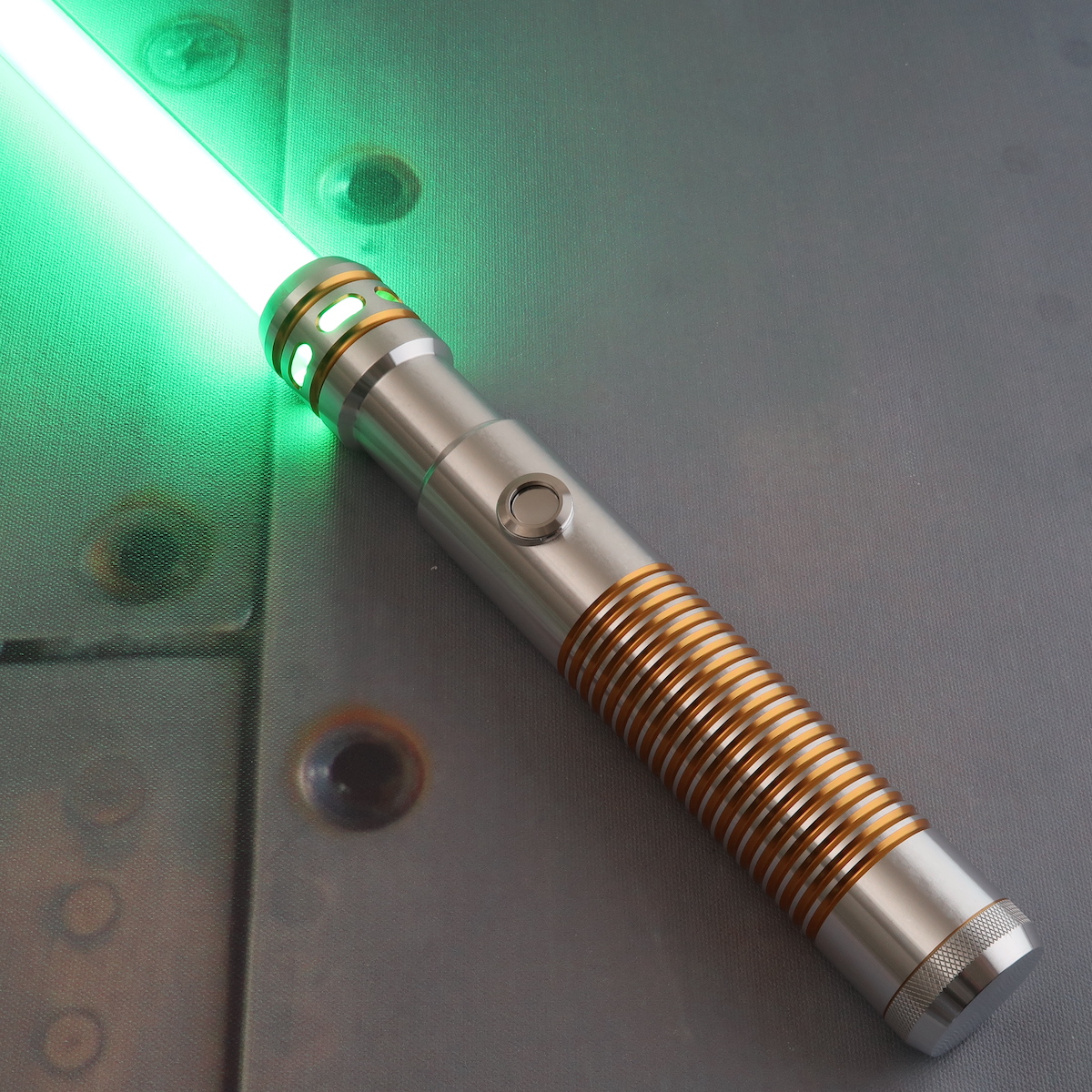
Original price was: $90.00.$76.50Current price is: $76.50.
Original price was: $210.00.$178.50Current price is: $178.50.
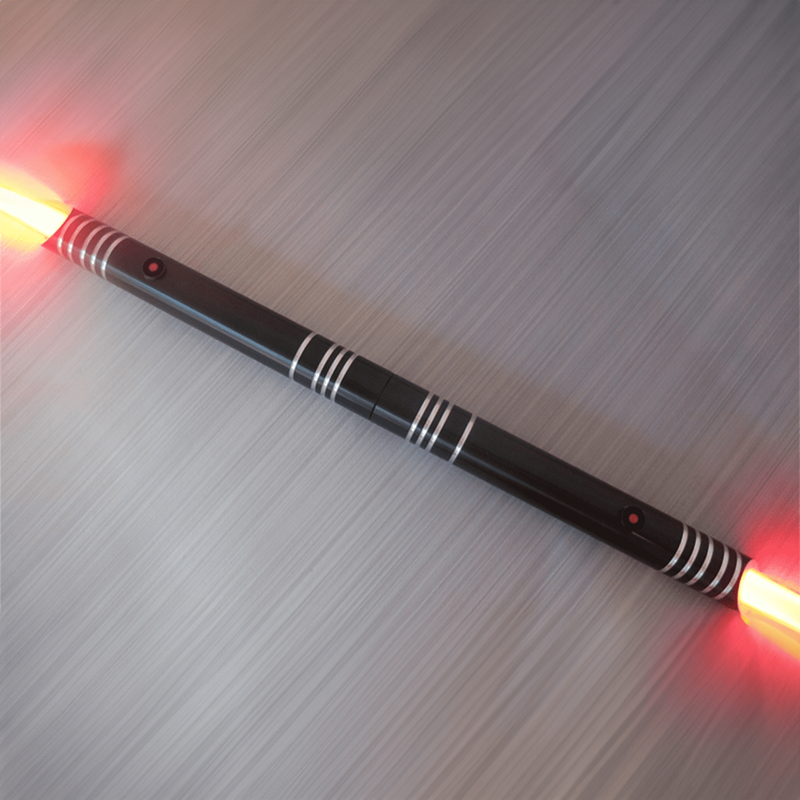
Original price was: $190.00.$161.50Current price is: $161.50.
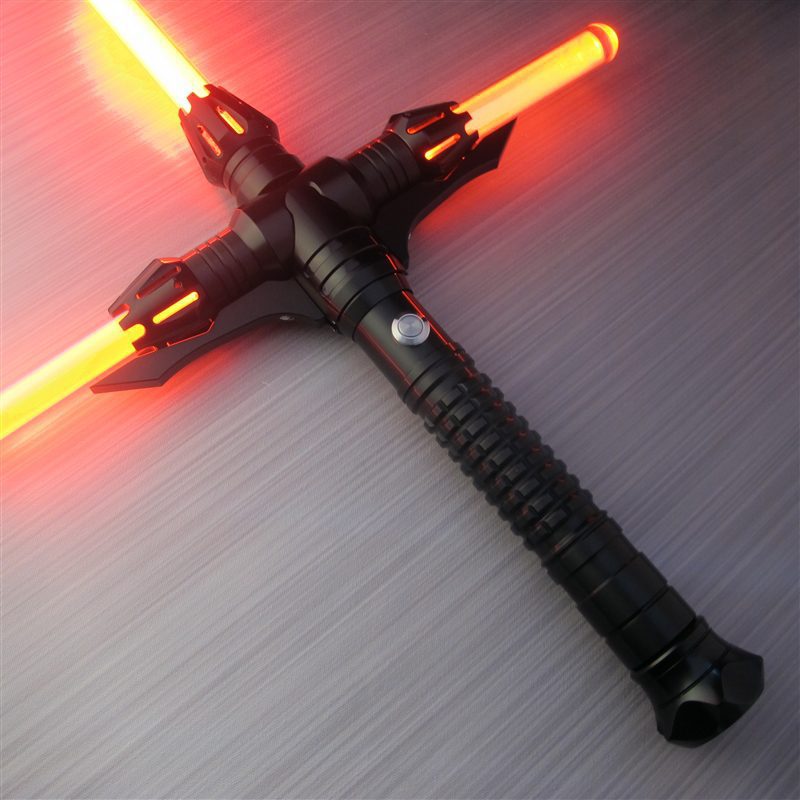
Original price was: $295.00.$250.75Current price is: $250.75.
Original price was: $295.00.$250.75Current price is: $250.75.
If you've spent any time digging into Star Wars lore, you've probably come across references to lightsaber techniques that don't seem to fit neatly into Forms I through VII. That can make the seven forms seem less definitive than they first appear. So, are there more than seven lightsaber forms?
The short answer is: the seven traditional forms are the primary framework for lightsaber combat, but they don't encompass every technique, variation, or fighting style used throughout Star Wars.
The seven forms are better understood as broad combat philosophies than as seven rigid martial arts. Individual Jedi and Sith could study multiple forms, combine techniques from different forms, or adapt their training to suit their own strengths and circumstances. Two Jedi could both identify as practitioners of the same form and still fight in noticeably different ways.
Jedi were not required to choose one form and use nothing else.
A Jedi might specialize in one form while borrowing techniques from another when the situation called for it. A practitioner of Soresu, for example, could still use offensive techniques learned from another form. A Jedi trained in Ataru could incorporate defensive principles from Soresu. The forms provided a foundation, but experience ultimately determined how an individual Jedi applied that knowledge.
This was especially important for experienced Jedi who had spent years fighting different kinds of opponents. Combat experience could expose weaknesses in a particular approach, encouraging a Jedi to expand their skill set rather than remain completely committed to one philosophy.
The same principle applied to Sith and other Force users. Their combat styles could incorporate elements from multiple traditions, making it difficult to assign every fighter to a single form.
There were also techniques and approaches to combat that were more specialized than the seven traditional forms.
Different weapons could require different methods of fighting. A Jedi using a double-bladed lightsaber had different concerns from someone using a standard single-bladed weapon. A fighter wielding two lightsabers had to develop coordination between both hands. Other specialized weapons and circumstances could require their own techniques.
Some Jedi also developed personal approaches based on their physical abilities, training, or experience. These methods might draw heavily from one of the traditional forms without fitting perfectly into its established principles.
This is one reason it can be misleading to think of the seven forms as a complete list of all lightsaber fighting styles. They provide the major categories, but the actual practice of lightsaber combat was considerably more varied.
This is where things can get particularly confusing. You may encounter references online to Form VIII, known as Sokan or Tracata, depending on the part of the fandom you find yourself in. These shouldn't automatically be treated as an official eighth form that sits alongside Shii-Cho, Makashi, Soresu, and the other traditional forms.
The established system consists of Forms I through VII. References to additional numbered forms can come from different sources, fan terminology, specialized techniques, or expanded Star Wars material rather than representing another universally recognized form of Jedi combat.
This becomes even more complicated when looking through older Legends material, where the history and terminology surrounding lightsaber combat can be considerably more expansive.
For that reason, if you're searching for "Form 8 lightsaber" or "lightsaber Form VIII," it's important to look at where the term originated and what it is actually describing rather than assuming that the Jedi simply created an official eighth form after Form VII.
Part of the confusion surrounding lightsaber combat comes from the enormous amount of material that has been published throughout Star Wars history.
The current canon establishes the seven traditional forms, but many of the more detailed histories, variations, and terminology surrounding lightsaber combat originated in the former Expanded Universe, now known as Legends. Some of those ideas remain part of Legends continuity, while others have been reinterpreted, adapted, or left outside current canon.
That distinction matters when researching all forms of lightsaber combat because two sources can provide different answers without either one necessarily being "wrong." They may simply be drawing from different versions of Star Wars continuity.
Ultimately, the seven traditional forms are best viewed as the foundation of formalized lightsaber combat rather than a complete catalog of every technique ever used.
The history of lightsaber combat is much more flexible than a list of seven names might suggest. Jedi and Sith continued to experiment, adapt, and combine techniques throughout their history, creating countless variations on the basic principles of lightsaber fighting.
And that brings us back to one of the most interesting things about the seven forms: they were never really meant to replace individual skill. They were a foundation for developing it.
If you've ever tried to research the history of lightsaber combat, you've probably noticed that different sources don't always agree with each other. Dates can change, characters can have different histories, and even the origins of particular lightsaber techniques can depend on which Star Wars stories you're looking at.
The reason is simple: Star Wars has more than one continuity.
The current Star Wars canon is the official continuity used for the movies, television shows, books, comics, and other stories released under what most call ‘Disney’ canon. Before that continuity was established, decades of stories made up what is now known as Legends, including the Expanded Universe material that helped flesh out the history of the Jedi, Sith, lightsabers, and their various combat traditions.
Current canon includes the stories that have been established as part of the present Star Wars continuity. This includes Episodes I-IX, all television shows and books (comics and novels) produced after the Disney Purchase of LucasFilm, and Star Wars: The Clone Wars.
When discussing the history of lightsaber combat from a canon perspective, it is important not to automatically carry over details from older Legends sources. Some ideas have been brought into canon, but others have not.
This is particularly important when discussing the earliest lightsabers and the development of Jedi combat. Canon has established that lightsabers have an extremely long history, but it doesn't provide a complete, uninterrupted timeline explaining every step between the earliest energy weapons and the lightsabers seen during the Skywalker saga.
In some cases, the safest answer is simply that we don't know yet.
Legends encompasses the large body of Star Wars material that existed before the current canon continuity was established. It includes novels, comics, reference books, and other stories that introduced many of the details fans associate with the history of the Jedi and their combat traditions.
A significant amount of the detailed history surrounding the seven lightsaber forms comes from this material.
Legends gave us extensive explanations of how the forms developed, which Jedi practiced them, how they were taught, and how different combat philosophies evolved over thousands of years. It also introduced terminology and historical details that continue to appear in discussions of lightsaber combat today.
That doesn't make those stories part of current canon, but it does make them an important part of the history of Star Wars lore.
The biggest problem comes when information from canon and Legends gets combined without making the distinction clear.
For example, you may find one source stating that a particular lightsaber technique was developed during a specific historical period, while another source gives a completely different explanation. You may also find a character described as using a particular form in one source while another story emphasizes a different style.
Sometimes that's because the information comes from different continuities. Other times, it's because lightsaber combat was never as rigidly defined as a simple list of seven fighting styles might suggest.
The seven forms have been described and expanded upon in different ways throughout Star Wars history, and individual Jedi were never necessarily limited to the techniques associated with a single form.
That is why it is worth considering the source whenever you're researching the history of lightsaber combat. A statement from a current canon source and one from a Legends reference book can both tell us something interesting about lightsaber lore without necessarily describing the same continuity.
One of the more interesting things about lightsaber history is that it isn't necessarily finished.
New Star Wars stories continue to explore periods of the galaxy that have received relatively little attention, particularly the ancient history of the Jedi and the origins of lightsaber technology. Ideas that were once exclusive to Legends have also occasionally found their way into current canon in new forms.
For anyone interested in the evolution of lightsaber combat, that means there will probably always be details that change, expand, or receive additional context.
What remains consistent is the basic story: the Jedi's approach to combat developed alongside their weapons, their enemies, and their understanding of the Force. The seven traditional forms represent an important part of that history, but they are only one chapter in a much larger story.
And that is ultimately what makes the history and evolution of lightsaber combat so interesting. There was never just one way to wield a lightsaber. There was a continual process of experimentation, adaptation, and refinement that continued for thousands of years.
Lightsaber combat didn't stay confined to the Star Wars universe. Over the years, fans have taken the idea of lightsaber dueling and turned it into a real-world hobby, complete with training groups, competitions, tournaments, and organized rulesets.
What started largely as fans recreating their favorite Star Wars fights has grown into a legitimate recreational activity. People around the world now train with lightsaber replicas, practice choreographed routines, and compete against one another in organized matches.
For many people, real-world lightsaber combat is simply a fun way to combine their love of Star Wars with physical activity. Training can involve footwork, strikes, blocks, parries, combinations, and controlled sparring.
It also attracts people with very different backgrounds. Some participants come from traditional martial arts, while others have no previous combat training at all. The appeal is part of what makes lightsaber combat different from simply learning a traditional martial art. You're not just learning how to fight with a weapon. You're getting to step into something that many Star Wars fans have imagined doing since they first picked up a toy lightsaber.
Different groups take different approaches. Some focus primarily on choreographed lightsaber combat, where the goal is to create convincing and entertaining duels. Others emphasize competitive sparring, where participants actually try to score points against an opponent under a defined set of rules.
Competitive lightsaber combat has developed its own tournament scene, with organizations establishing rules for everything from legal target areas to scoring and equipment.
Depending on the organization, competitors may fight with single-bladed lightsabers, double-bladed weapons, or other configurations. Some tournaments are based heavily around fencing-style scoring, while others incorporate rules designed specifically around the way lightsabers are represented in Star Wars.
The rules are important because a real lightsaber obviously doesn't exist, and an actual energy blade would create an entirely different set of problems. Competitive lightsaber combat therefore has to strike a balance between making the matches safe, competitive, and recognizable as lightsaber dueling.
Protective equipment is typically an important part of organized sparring. Participants may use protective gloves, helmets, padded clothing, and other equipment depending on the rules of the organization and the intensity of the competition.
Interestingly, real-world lightsaber combat has also developed its own relationship with the seven fictional forms.
Some groups teach techniques inspired by Shii-Cho, Makashi, Soresu, and the other traditional forms, while others build their systems around real-world martial arts and fencing principles. A person may therefore practice something called "lightsaber combat" without actually trying to reproduce one of the fictional Jedi forms exactly.
This distinction is important.
The seven lightsaber forms were created as part of Star Wars lore. Real-world practitioners have to contend with the actual physics of a physical prop, the limitations of protective equipment, and the rules established by whatever organization they are training or competing with.
In other words, real lightsaber combat is inspired by Star Wars, but it isn't bound by Star Wars.
That has allowed the hobby to develop in its own direction. Different groups have experimented with different weapons, rules, training methods, and competitive formats, creating something that is recognizable to Star Wars fans while also functioning as a legitimate recreational combat sport.
There is something pretty fitting about the fact that lightsaber combat has developed beyond the movies. The fictional history of the Jedi is largely a story about people continually refining how they use their weapons, and real-world enthusiasts have done much the same thing.
People have taken an imaginary weapon, built physical versions of it, and developed their own methods for training and competing with them.
You aren't going to become a Jedi by joining a lightsaber tournament, of course. But you can learn footwork, timing, distance management, coordination, and controlled sparring while having a pretty good time doing it.
And for Star Wars fans, getting the opportunity to actually pick up a lightsaber and learn how to fight with one is probably about as close as we're going to get.
Original price was: $175.00.$148.75Current price is: $148.75.
Original price was: $190.00.$161.50Current price is: $161.50.
Original price was: $160.00.$136.00Current price is: $136.00.
Original price was: $270.00.$229.50Current price is: $229.50.
Original price was: $295.00.$250.75Current price is: $250.75.
Original price was: $255.00.$216.75Current price is: $216.75.
Original price was: $170.00.$144.50Current price is: $144.50.
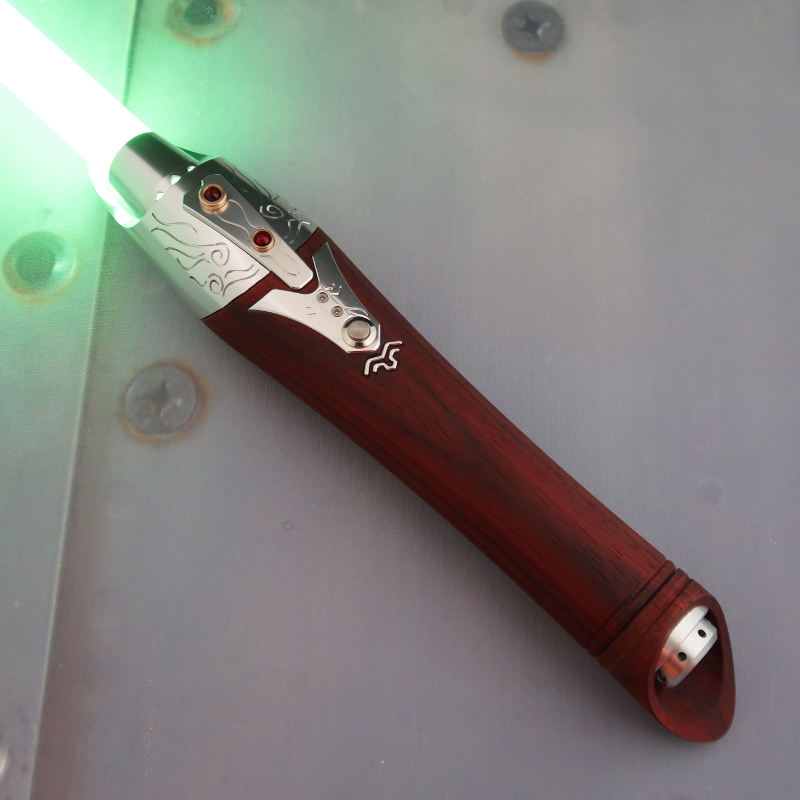
Original price was: $235.00.$199.75Current price is: $199.75.


