The Mortis Gods, or the Ones, were a family of Force wielders who lived in the spiritual realm of Mortis. Their story was first introduced during Star Wars: The Clone Wars, where Anakin Skywalker, Obi-Wan Kenobi, and Ahsoka Tano encountered the strange family and became caught in their conflict.
At the time, the Mortis arc seemed like an unusual detour into some of the stranger corners of the Force. But years later, the Mortis Gods have become increasingly important to Ahsoka’s story. Their influence can be seen in Star Wars Rebels, the World Between Worlds, and ultimately the statues found on Peridea at the end of Ahsoka Season 1.
With the Mortis Gods confirmed to have a presence in Ahsoka Season 2, it’s worth going back to where this all began. Here’s everything you need to know about the Mortis Gods, their connection to Ahsoka, and why they may be so important to the next chapter of her story.

Original price was: $210.00.$178.50Current price is: $178.50.

Original price was: $220.00.$187.00Current price is: $187.00.

Original price was: $240.00.$204.00Current price is: $204.00.
Original price was: $200.00.$170.00Current price is: $170.00.

Original price was: $220.00.$187.00Current price is: $187.00.

Original price was: $200.00.$170.00Current price is: $170.00.
Original price was: $220.00.$187.00Current price is: $187.00.
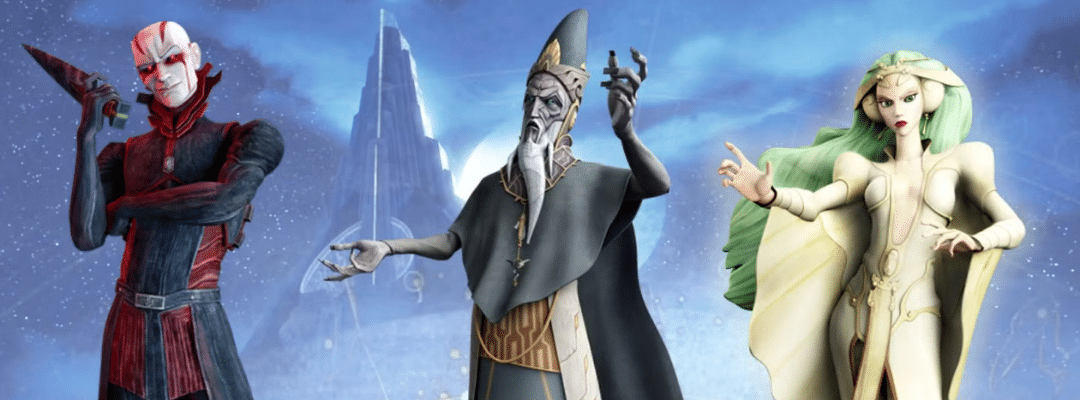
The Star Wars Mortis Gods were comprised of three figures: the Son, who aligned himself with the Dark Side of the Force; the Daughter, who aligned herself with the Light Side; and the Father, who maintained the balance between them.
The three beings lived in the realm of Mortis, an ethereal place that exists outside the normal rules of the galaxy. During the Clone Wars, Mortis appeared to Anakin, Obi-Wan, and Ahsoka after an enormous monolith broadcasting an ancient Jedi distress signal appeared in the Chrelythiumn system.
Once they arrived, the Jedi discovered that the three beings were incredibly powerful Force wielders unlike anything they had encountered before. The Father maintained control over his two children, keeping the Son and Daughter in balance. Mortis itself has been described as the “fulcrum of the entire galaxy and the Force.”
The Father knew that his time was coming to an end and believed that someone would eventually need to take his place. He believed Anakin Skywalker, the prophesied Chosen One, could become that successor.
When the Father learned that the Chosen One had been discovered, he drew Anakin, Obi-Wan, and Ahsoka to Mortis. The Father wanted to determine whether Anakin was truly the Chosen One described in Jedi prophecy. More importantly, he wanted to know whether Anakin could eventually take his place as the being responsible for keeping the Son and Daughter in balance.
Anakin was put through a series of tests designed to determine whether he was capable of controlling both of the Father’s children. Ultimately, Anakin proved he could do exactly that. The Father saw the potential for Anakin to become his successor and said he wanted him to maintain the balance, but that he would need to relieve himself of his guilt. In the end, Anakin refused to stay while the galaxy was still at war and refused to leave Padmé.
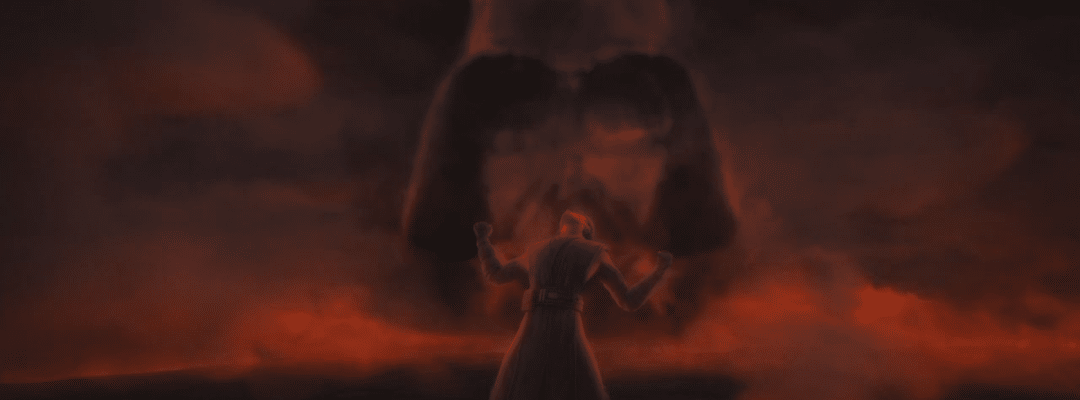
The Father wasn’t the only member of the family interested in Anakin; the Son had his own plans for the Chosen One. From the moment the Jedi arrived on Mortis, the Son attempted to manipulate Anakin into joining him. He separated Anakin from Obi-Wan and Ahsoka and showed him visions designed to exploit his fears, insecurities, and guilt.
The Son attempted to turn Anakin by showing him visions of the future and convincing him that joining the Dark Side would let him prevent the suffering he foresaw. It’s another example of the same fundamental weakness that Palpatine would later exploit when he tempted Anakin with the possibility of saving Padmé.
The Son wanted to escape his Father’s control and leave Mortis so he could spread his influence throughout the galaxy.
The conflict escalated when the Son kidnapped Ahsoka and attempted to use her to lure Anakin to his side.
The Son used the Dark Side to corrupt Ahsoka, turning her against Anakin and Obi-Wan. The resulting conflict forced the Jedi to fight their own friend while the Father attempted to prevent his children from destroying one another.
The Daughter eventually realized that the Son had become too dangerous to stop conventionally, so she took Obi-Wan to retrieve the Mortis Dagger, the only weapon capable of taking out the Mortis Gods.
The Son ended up with the Dagger of Mortis during the combat and attempted to use it against the Father. The Daughter placed herself between them and was struck by the blade, sacrificing herself to save her Father.
As she lay dying, her remaining life force was transferred into Ahsoka, bringing the young Jedi back to life after the Son had killed her. The Daughter was gone, but part of her connection to Ahsoka remained, becoming much more important later in the story.
With the Daughter dead, the balance on Mortis began to collapse, and the Son saw his opportunity to escape. His ultimate goal had always been to leave Mortis and take his power into the galaxy. With the Father weakened and grieving the loss of his daughter, the Son attempted to use the Jedi’s ship to escape.
Anakin confronted him, but the Son showed Anakin a vision of his future. Anakin saw the devastation he would eventually cause as Darth Vader.
Rather than turning away from the Dark Side, in true Anakin logic, he temporarily allowed himself to be convinced that joining the Son could prevent the future he had witnessed. It was one of several moments in the Mortis story that deliberately foreshadowed Anakin’s eventual fall.
Ahsoka sabotaged the ship, preventing the Son from escaping, while she and Obi-Wan joined the Father in confronting him. The Father ultimately realized there was only one way to stop the Son. He erased Anakin’s memories of the future the Son had shown him. Then, knowing that his own death was necessary, the Father sacrificed himself.
With the Father gone, Anakin was finally able to kill the Son. The three Mortis Gods were dead, the Jedi had escaped the Mortis realm, and the Mortis story seemed over, but that was just the beginning.
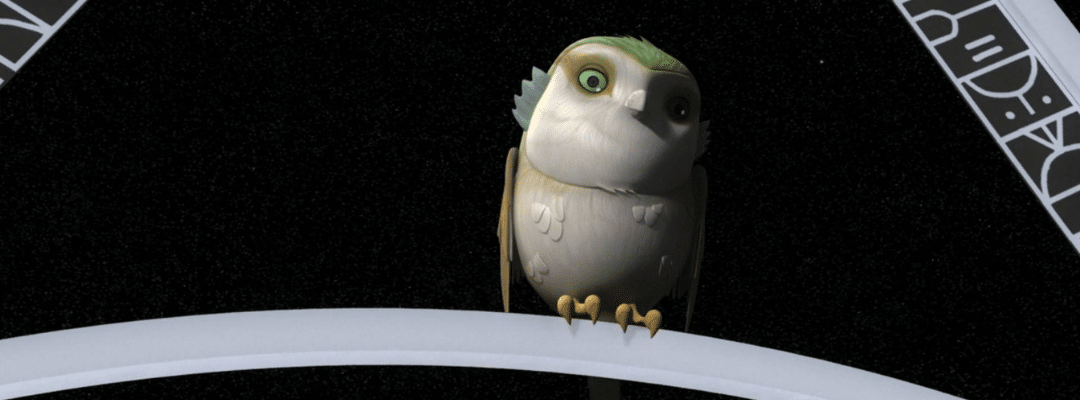
The Daughter’s influence continued through one of the strangest recurring characters in Ahsoka’s story: a small convor named Morai. Morai is an owl-like creature with a mysterious connection to the Daughter. After the events on Mortis, Morai repeatedly appears around Ahsoka, following and watching over her.
Morai’s importance becomes much clearer in Star Wars Rebels. During Ahsoka’s confrontation with Darth Vader on Malachor, she is seemingly left behind as the Sith temple collapses. Her fate remains unknown until Ezra Bridger discovers the World Between Worlds.
Morai appears within this strange realm and helps guide Ezra toward Ahsoka. Ezra reaches through a portal and pulls Ahsoka out of her battle with Vader, saving her life.
The important distinction is that Morai isn’t explicitly identified as the Daughter reincarnated. Instead, canon describes her as a convor with a mysterious connection to the Daughter. Whatever that connection ultimately means, Morai has remained closely associated with Ahsoka ever since.
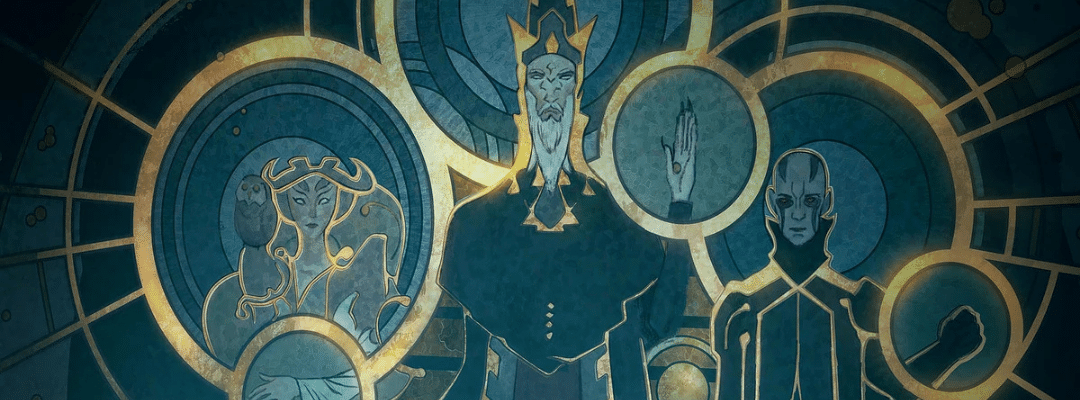
The World Between Worlds is a mysterious realm within the Force that exists outside conventional time and space. It contains pathways and doors connecting different moments throughout history.
The connection to Mortis is immediately apparent. The entrance to the World Between Worlds on Lothal was hidden behind an ancient mural depicting the Father, Son, and Daughter. When Ezra discovered the mural and unlocked its secret, he entered the mysterious realm beyond it.
The Empire eventually discovered the existence of the World Between Worlds as well. Emperor Palpatine became obsessed with accessing it because of the extraordinary power it potentially offered.
But Ezra reached it first, and that allowed him to save Ahsoka from her old master. The Mortis Gods therefore aren’t simply characters from an isolated Clone Wars story. Their imagery is directly connected to one of the most mysterious Force phenomena introduced in modern Star Wars storytelling.
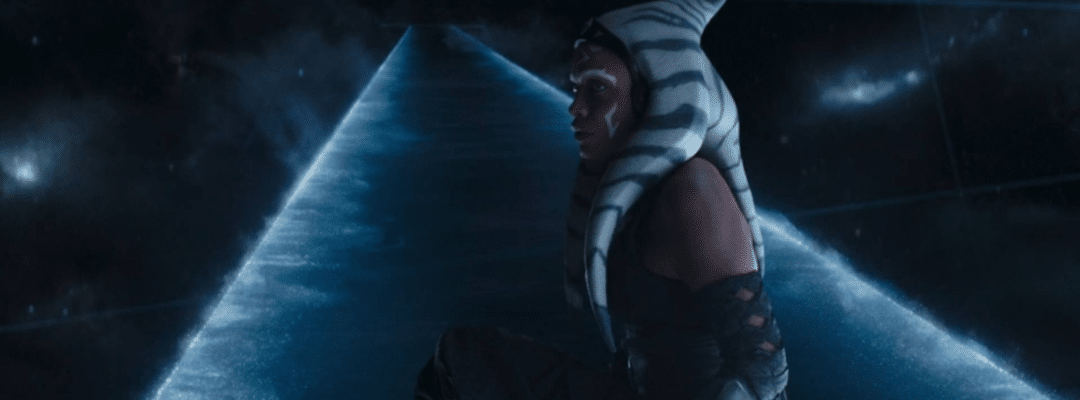
The connection became even more important in Ahsoka. After Baylan Skoll defeated Ahsoka on Seatos, she fell into the ocean below and appeared to be dead. Instead, she awoke in the World Between Worlds, where she encountered Anakin Skywalker once again.
Anakin challenged Ahsoka to confront her past, taking her through memories of the Clone Wars and allowing her to relive key moments from her life as his Padawan.
The experience wasn’t simply about revisiting old battles. Ahsoka had spent years carrying the weight of Anakin’s fall and the knowledge that her former Master had become Darth Vader. Her journey through the World Between Worlds forced her to confront that history and decide what she would carry forward.
Anakin’s lesson ultimately allowed Ahsoka to move forward rather than remain defined by her past, and relieved her of her own guilt over Anakin’s fall, similar to what the Father attempted with Anakin on Mortis.
It also reinforced an increasingly important connection between Ahsoka, Anakin, the World Between Worlds, and the mythology of the Mortis Gods in Ahsoka and beyond.

Original price was: $220.00.$187.00Current price is: $187.00.
Original price was: $205.00.$174.25Current price is: $174.25.

Original price was: $835.00.$709.75Current price is: $709.75.

Original price was: $835.00.$709.75Current price is: $709.75.
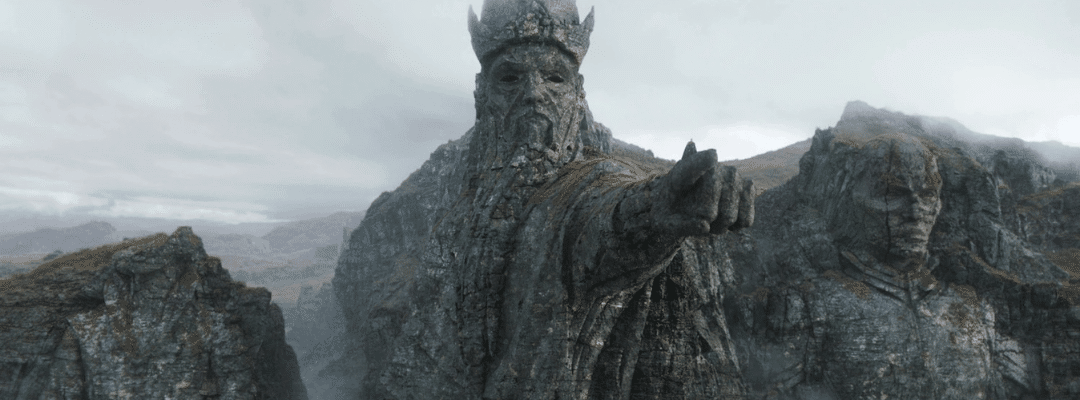
The Mortis Gods finally returned to the forefront of the story at the end of Ahsoka Season 1. After traveling to the far galaxy with Sabine Wren, Ahsoka discovers that Peridea is an ancient world with a long and mysterious history. It is also the ancestral home of the Dathomiri and the destination of the purrgil migration route between galaxies.
And scattered across the landscape are enormous statues depicting the Father, Son, and Daughter, placing the Mortis Gods at the center of one of the biggest mysteries heading into Season 2.
Baylan Skoll spent much of Ahsoka Season 1 searching for something. He wasn’t simply trying to help Grand Admiral Thrawn return to the known galaxy. Baylan repeatedly expressed his belief that the Jedi, Sith, and the various powers that followed them were trapped in an endless cycle of conflict.
He wanted to find something older and powerful enough to break that cycle. By the end of Season 1, Baylan’s search led him directly to the Mortis statues. The final image of Baylan shows him standing atop the massive statue of the Father, looking across the ancient landscape of Peridea.
The implication is clear: whatever Baylan was searching for is connected to the ancient history represented by those statues. Exactly what that connection is remains one of the biggest unanswered questions going into Season 2.
Peridea isn’t just an arbitrary planet in another galaxy. It is the ancient homeworld of the ancestors of the Dathomiri Nightsisters, and the Great Mothers who accompanied Thrawn have a deep connection to the planet. The Great Mothers are themselves ancient Dathomiri witches who use their mysterious magick to communicate across vast distances and influence events in the known galaxy.
That means Ahsoka has placed several different pieces of ancient Force-related mythology in the same location:
Whether these elements are directly connected or simply happen to converge on Peridea is one of the mysteries Season 2 will hopefully address.
In Star Wars Legends, Abeloth has a complicated connection to the Mortis Gods. Abeloth began as a mortal woman, known as the Servant, who lived with the Father, Son, and Daughter. She eventually became known as the Mother, helping maintain harmony within the unusual family.
Unlike the Father, Son, and Daughter, the Servant was mortal and aged. Fearing that she would eventually lose her family, she drank from the Font of Power and bathed in the Pool of Knowledge in an attempt to become immortal. Instead, she was transformed into the powerful and dangerous Dark-Side entity known as Abeloth. The Ones ultimately imprisoned her, and she later became a major threat in the Star Wars: Fate of the Jedi Legends novels.
Importantly, Abeloth is not currently part of established Star Wars canon, and there has been no official confirmation that she is connected to the Mortis Gods seen on Peridea or will appear in Ahsoka Season 2. The similarities have naturally fueled fan theories, but for now, the Mother and her relationship with the Ones remain part of Legends rather than the canonical Mortis story.
We don’t have to speculate about whether the Mortis Gods will matter in Season 2. Dave Filoni confirmed that the Mortis Gods will have a presence in the second season. Discussing the enormous statues seen at the end of Season 1, Filoni described the storyline as “big,” “crazy,” and “complicated.”
The connection has become even harder to ignore as Season 2 has approached. The first Season 2 teaser prominently features Mortis imagery, and Filoni and the cast appeared onstage at D23 in front of a set decorated with carvings of the Mortis Gods.
Hayden Christensen is also returning as Anakin Skywalker, meaning the character who was at the center of the original Mortis story will once again be part of Ahsoka’s journey.
That doesn’t necessarily mean Anakin will return to Mortis itself, or that the original Mortis Gods will simply appear as they did in The Clone Wars, but it does mean the story has come full circle in a very deliberate way.
You don’t need to rewatch every episode of The Clone Wars and Rebels to understand what’s happening with the Mortis Gods. There are a few key details worth keeping in mind:
The Father represented balance. He maintained control over the Son and Daughter and believed Anakin could eventually take his place.
The Daughter represented the Light Side. She sacrificed herself to save the Father, transferring her remaining life force to Ahsoka.
The Son represented the Dark Side. He wanted to escape Mortis and spread his influence throughout the galaxy.
All three Mortis Gods died. The Father sacrificed himself so Anakin could kill the Son, while the Daughter had already sacrificed herself to protect her Father.
Morai is connected to the Daughter. The convor repeatedly appears around Ahsoka and helped guide Ezra to her in the World Between Worlds.
The World Between Worlds is connected to Mortis imagery. The Lothal entrance was hidden behind a mural of the Father, Son, and Daughter.
Ahsoka has personally experienced the World Between Worlds twice. Ezra rescued her there after her confrontation with Vader, and she later returned there after Baylan defeated her on Seatos.
The Mortis Gods have statues on Peridea. The statues are located in another galaxy, raising questions about how the Mortis mythology reached the ancient world.
Baylan was searching for an ancient power. His search ultimately led him to the Mortis statues at the end of Season 1.
If you want to refresh your memory before Season 2 without watching hundreds of episodes, there are a handful of stories that matter most.
Star Wars: The Clone Wars S3 EP15 – “Overlords”
This is where Anakin, Obi-Wan, and Ahsoka first encounter the Mortis Gods. It introduces the Father, Son, and Daughter and establishes the Father’s interest in Anakin as the potential successor who could maintain balance.
Star Wars: The Clone Wars S3 EP16 – “Altar of Mortis”
This episode escalates the conflict between the Son and Daughter and contains the Daughter’s sacrifice, Ahsoka’s corruption, and the introduction of the Dagger of Mortis.
Star Wars: The Clone Wars S3 EP17 – “Ghosts of Mortis”
The final chapter of the Mortis arc brings the Father’s plan to a close and ends the conflict among the three beings.
Together, these three episodes tell the complete Mortis story.
Star Wars Rebels S2 EP21-22 – “Twilight of the Apprentice”
This two-part Season 2 finale provides context for Ahsoka’s confrontation with Darth Vader on Malachor and sets up her connection to the World Between Worlds.
Star Wars Rebels S4 EP13 – “A World Between Worlds”
This is arguably the most important episode to revisit if you’re specifically interested in the Mortis connection. Ezra discovers the World Between Worlds through the Mortis mural and uses it to save Ahsoka from Vader.
Star Wars: Ahsoka – EP4 “Fallen Jedi” and EP5 “Shadow Warrior”
These episodes introduce Ahsoka’s second encounter with the World Between Worlds and bring Anakin Skywalker back into her story. Ahsoka revisits her time as Anakin’s Padawan and confronts the legacy of the Clone Wars.
Star Wars: Ahsoka – EP8 “The Jedi, the Witch, and the Warlord”
Finally, revisit the Season 1 finale. This is where Ahsoka and Sabine arrive on Peridea, Thrawn escapes, and Baylan begins his search among the enormous Mortis statues.
The Mortis Gods began as one of the stranger mysteries introduced during The Clone Wars.
Anakin, Obi-Wan, and Ahsoka stumbled into a realm outside the normal galaxy and encountered a family of beings who seemed to embody fundamental aspects of the Force. The Father sought balance, the Daughter represented the light, and the Son embraced the dark.
Then they all died, and for years that seemed to be the end of the story.
The Daughter’s connection to Ahsoka continued through Morai. The Mortis mural became the gateway to the World Between Worlds. Ahsoka was saved by Ezra in that realm with Morai’s help, then returned to it years later to confront her past with Anakin.
After everything we’ve seen so far, there is plenty left to speculate about. Like, is Anakin a Mortis God now? There is no confirmation that Anakin has become one of the Star Wars Mortis Gods, but his history with the Father and return in Ahsoka make the possibility of a new role within the Force an intriguing theory. My personal hope is that Anakin has taken over the role the Father held, trying to maintain balance over the galaxy as a whole, without having to create a prison for himself as the Father did.
With the Mortis Gods once again looming over Ahsoka’s story, Season 2 may finally reveal whether Anakin’s connection to Mortis ended with The Clone Wars, or was only beginning.


